EV Charge Cost AFDC / EIA 2026
5-Step Audit
EIA / DOE AFDC Data NEC Article 625 Updated Nov 2026

How Much Does It Really Cost to Charge an Electric Vehicle?

Independent, factual cost analysis comparing residential overnight off-peak tariffs, commercial Level 2 stations, ultra-fast 800V DC charging, and licensed 240V home wallbox installation expenses across US, UK, Canada, and Australia.

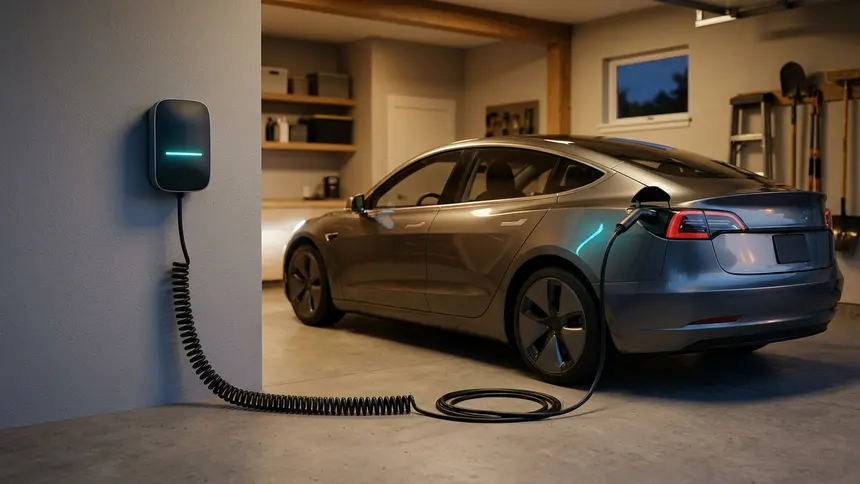
Modern wall-mounted Level 2 EV charger inside a residential garage charging an electric vehicle
Dedicated 48A hardwired Level 2 installation: saves 55% to 75% over public DC Fast Charging networks.
Sponsored Energy & Mobility Partner

01. Select 2024–2026 Vehicle Model Preset

Populate usable kWh battery pack, charging efficiency, and EPA/WLTP range into the calculator below.

EPA / WLTP Verified Specs

02. Energy & Utility Tariff Inputs

Battery Usable Pack Capacity 75 kWh
$ / kWh
3.8 mi/kWh
Estimated Charging Session Cost
$8.40
50.0 kWh billed (20% to 80%, 90% AC efficiency)
Driving Range Delivered 171 miles
Cost per 100 Distance $4.91
Gas Equivalent (ICE) $21.68
Net Fuel Savings +$13.28 (61%)
Annual Savings (12,000 miles): +$930 / year
Recommended Next Funnel Step:

A 48A hardwired Level 2 smart charger with Time-of-Use scheduling maximizes overnight fuel savings.

Added-Value Pre-Quote Funnel Avoid $2,500+ Panel Surprises

The 5-Step Home EV Charger Pre-Install & Tariff Audit

Many homeowners overpay by thousands on unnecessary 200A service upgrades or melt builder-grade NEMA 14-50 outlets. Run our 4-point electrical panel, continuous load, and Time-of-Use utility checklist before hiring an electrician.

Residential electrical breaker panel showing 200A main busbars and dedicated branch conduit

03. UL-Listed Level 2 Charging & Electrical Safety Gear

Tested EVSE wallboxes, high-amp adapters, and NEC 625 panel hardware (Amazon Associates · tag=martinkinusa-20).

Residential garage with wall-mounted Level 2 smart EV charger connected to an electric sedan
48A Smart Wallbox · UL 2594 / Energy Star

48-Amp Hardwired Level 2 Smart EV Charger

Scheduled off-peak utility charging, Wi-Fi kWh session logging, and UL/ETL certification for 60A NEC 625 circuits.
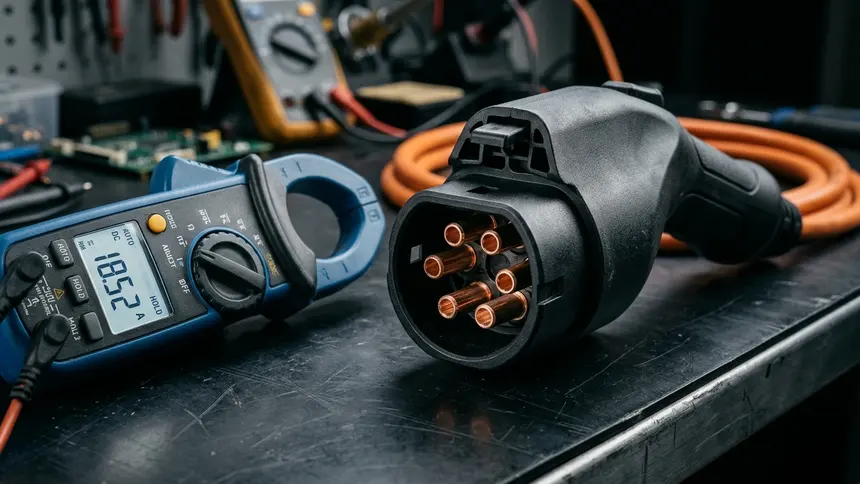
SAE J1772 and NACS EV charging connectors on an electrical test bench with clamp meter
NACS & J1772 · 250A / 80A Rated

UL-Listed NACS to J1772 & CCS1 Charging Adapter

High-amp thermal-cutoff adapter kit for accessing destination chargers and expanding DC fast-charging compatibility.
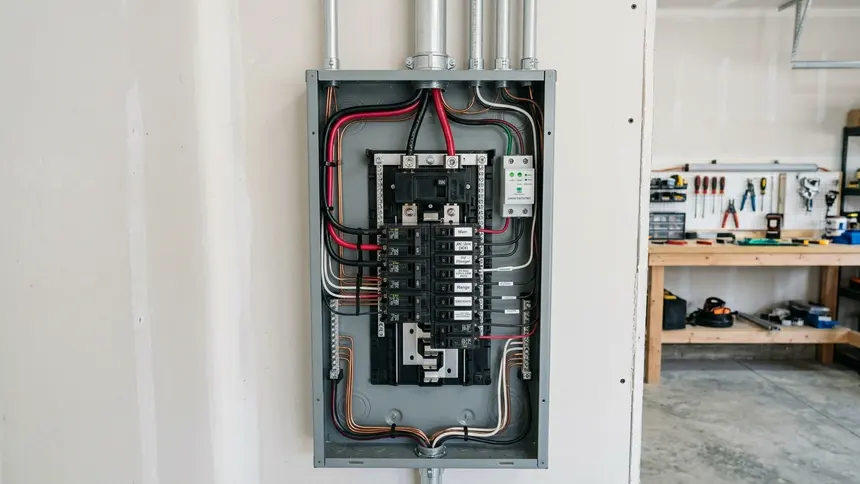
Open 200A residential electrical breaker panel wired cleanly with copper feeders and conduit
100A Panel Saver · NEC 625.42 DLM

EV Energy Management & Smart Load Shedding Kit

Automated current throttling for 100A residential panels—avoids costly $2,500+ service panel upgrades.

Electrical clamp meter verifying continuous EV load current beside a charging handle
Industrial Grade · NEMA 14-50R EV

Heavy-Duty EV-Grade NEMA 14-50 Receptacle & Torque Driver

Continuous-duty copper-alloy outlet rated for 75 in-lb terminal torque to prevent builder-grade outlet melting.

04. Speed, Electrical Draw & Real Cost Benchmarks

Factual benchmarks compiled from U.S. Alternative Fuels Data Center (AFDC) and UK Ofgem official price caps.

Tier / Power Level Electrical Specification Throughput Added / Hr Effective Cost / kWh Cost to Fill 75 kWh Grid Demand / Use Case
Level 1 (Standard 120V) 120V / 12A - 16A (1.4 - 1.9 kW) 3 - 5 miles / hour $0.168 / kWh $12.60 Emergency trickle charging or plug-in hybrids
Level 2 Home (240V AC) 240V / 32A - 48A (7.7 - 11.5 kW) 28 - 44 miles / hour $0.100 - $0.168 / kWh $7.50 - $12.60 Primary overnight residential charging
Level 2 Commercial AC 208V - 240V / 32A (6.6 - 7.7 kW) 20 - 30 miles / hour $0.280 - $0.340 / kWh $21.00 - $25.50 Workplaces, multi-family housing, city parking
Level 3 DC Fast (400V) 50 kW - 150 kW Direct Current 140 - 200 miles / 30 min $0.380 - $0.440 / kWh $28.50 - $33.00 Highway corridors, regional travel
Ultra-Fast DC (800V Architecture) 250 kW - 350 kW Direct Current 200+ miles / 18 min $0.420 - $0.520 / kWh $31.50 - $39.00 Porsche Taycan, Hyundai Ioniq 5, Kia EV6
Sponsored Home Electrical & EV Resource

05. Home Level 2 Charger Installation Cost Breakdown

Real breakdown of hardware equipment, electrical permitting, and licensed electrician labor under NEC 625.

Dedicated residential wallbox EV charger mounted in garage
$400 - $750 Hardware

1. Dedicated Level 2 Smart Wallbox

UL/ETL listed 32A to 48A smart EVSE unit. Direct hardwiring enables up to 48A (11.5 kW) continuous throughput without thermal plug degradation.

EV charging connector and digital clamp meter measuring continuous amperage
$450 - $1,200 Labor & Permit

2. Electrical Conduit & Labor

Running a dedicated 240V 50A or 60A double-pole breaker with 6 AWG copper wire from the main distribution panel to the garage, plus municipal inspection.

Open main electrical service panel with labeled breakers and copper ground bars
$1,500 - $3,000 (If Required)

3. Service Panel Upgrade or Load Shedding

Older 100A panels can either upgrade to 200A ($1,500–$3,000) or install an NEC 625.42 dynamic load management controller ($300–$600).

NEC Article 625 Engineering Rule: 125% Continuous Load Sizing

Under NEC 625.41, electric vehicle charging is legally classified as a continuous load (operating 3+ hours). Branch circuits must be sized at 125% of charger continuous amperage: a 40A charger requires a 50A breaker, while a 48A charger requires a 60A breaker wired with 6 AWG copper rated at 75°C or higher.

Frequently Asked Technical Questions

Why is DC Fast Charging more expensive than charging at home?

Commercial fast charging operators pay industrial peak demand charges, commercial 480V three-phase transformers, liquid-cooled 350 kW cable hardware, and station lease costs. Residential charging bypasses all of those surcharges.

Does frequent fast charging damage battery longevity?

Repeated DC fast charging generates higher cell temperatures and faster lithium plating over many cycles. Engineers recommend Level 2 AC charging to 80% for daily commuting and saving DC Fast Charging for highway trips.

What is Time-of-Use (TOU) electricity metering?

TOU utility plans offer overnight windows (typically 11:00 PM to 6:00 AM) at 40% to 70% below daytime rates. Scheduling EV charging during off-peak hours delivers the lowest cost per mile driven.

Can I charge an electric vehicle directly from home solar panels?

Yes. Charging from rooftop solar drops effective fueling cost to $0.05–$0.07/kWh over the system lifecycle. Smart EVSE units automatically modulate amperage to absorb only excess solar export.